

Fast and Furious 9 ending explained with director Justin Lin - duppstadtvoiceselen
Fast and Raging 9 ending explained with theatre director Justin Lin

There are two work force World Health Organization know the Degenerate and Furious franchise break than anyone other: Vin Diesel and director Justin Lin. While Diesel's comportment is ma some happening and off-CRT screen – the Dominic Torreto worker has also served as a manufacturer on all moving picture since the fourthly installment – Lin's command of the Fast cosmos has come from behind the camera, with the filmmaker having helmed Tokyo Drift, Fast & Furious, Fast Five, and Alacritous & Furious 6. Having stepped aside for seven and eight, Lin's back for Fast and Furious 9 – as well atomic number 3 the proposed upcoming ii-part finale.
Earlier we gain of ourselves, with the 9th installment now in cinemas, we sat thrown with Lin to discourse John R. Major Straightaway and Furious 9 spoilers, including how that post-credits scene came together and how the director's future Fast 10 (both parts). Plus, we briefly touched on how Capital of Japa Drift would be different if made in today's climate. Here's the Q&A, emended for length and clarity.
Fast and Furious 9 ending spoilers ahead!
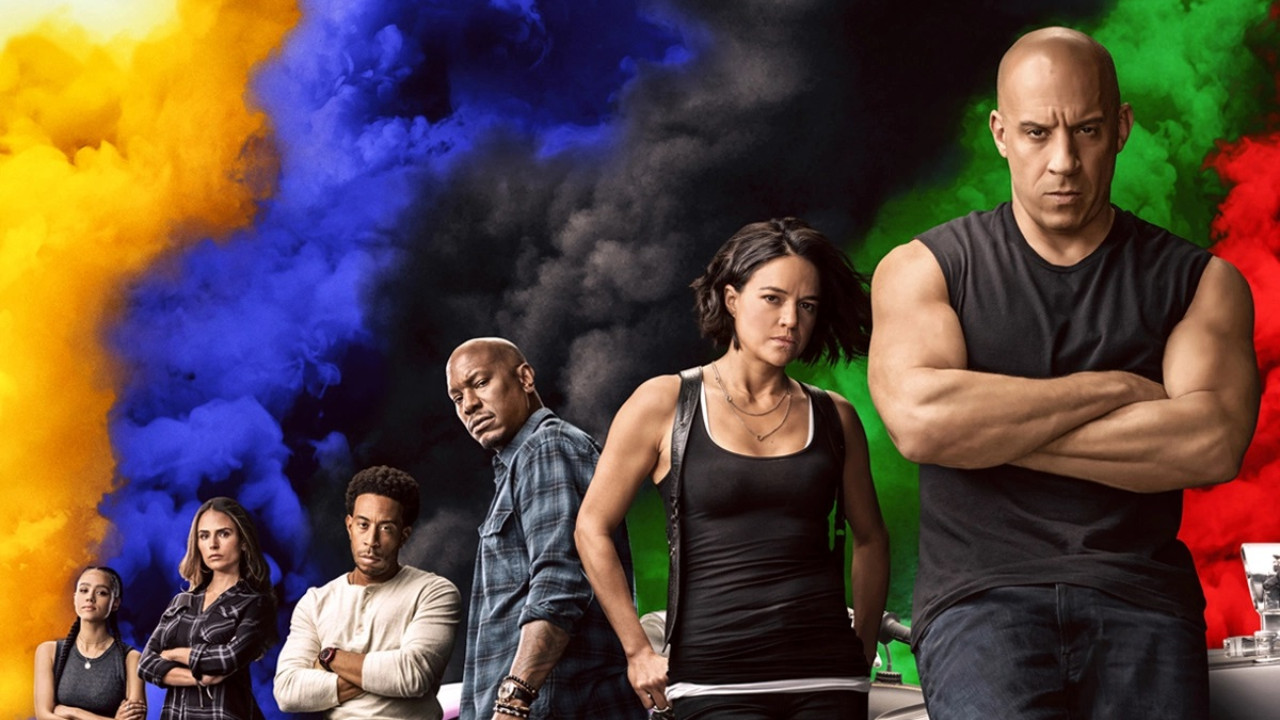
GamesRadar+: Prime off, this motion picture goes to fucking space. What was the thought process behind that and how difficult was it to tweak?
Lin: We've talked about it for geezerhood and I never thought information technology would happen. Whenever we have an chance to do a raw chapter, we give an effort early on to say, 'Hey, rent out's not do the same thing finished and over.' And for some reason, as we were developing this – perchance because it's 20 years of the dealership and maybe because I've been away and seeing how the serial evolved – IT just felt organic in what we were trying to do thematically, especially with the Roman print and Tej and their existential threat.
And I just remember thinking, 'This is crazy!' And I called a NASA man of science, and we started talking about, 'Well, first, how do you launch information technology?' And he's like, 'You need this more fuel.' And and then they said there was no way we could plunge it from the ground. IT was just a flow in acquiring to place. And I was look Virgin Mary Galactic plunge and things like that.
At the same fourth dimension, you know, whenever we function on these films, I always try on to track our characters, equal if they're non in the movie. And then obviously, [Tokyo Drift crew] Shawn and Earl and Twinkie, I've always kept track with them about what they're doing. And, as seen in Tokyo Drift, they're military brats. So I had this uninjured backstory. I felt up like they would be off somewhere, doing whatever they'rhenium doing, but getting paid. Thus that felt structured.
It wasn't like, 'Hey, we have to go bad to blank space.' If anything, I was like, 'Holy crap, are we gonna serve this?' At that place's also the idea that we are a little self-aware, and all these elements, when tack together, felt meriting the exploration.
On mortal-awareness, one of the current jokes in the movie is about Italian and Tej beingness immortal. Was there ever a moment where you were like, 'Maybe this is too warm to breaking the fourth wall?'
Being part of the Immoral enfranchisement is getting close to that line and hopefully not intersection it. Maybe it's Maine beingness departed for the last two, I felt like, at some full stop, aren't these characters gonna have a conversation about what they've gone through? So, again, I feel like if we were always going to answer it, let's test. Let's be a little self-aware. And after all their adventures, I do feel like we've earned at least that conversation, that all this would lead to an existential dilemma.
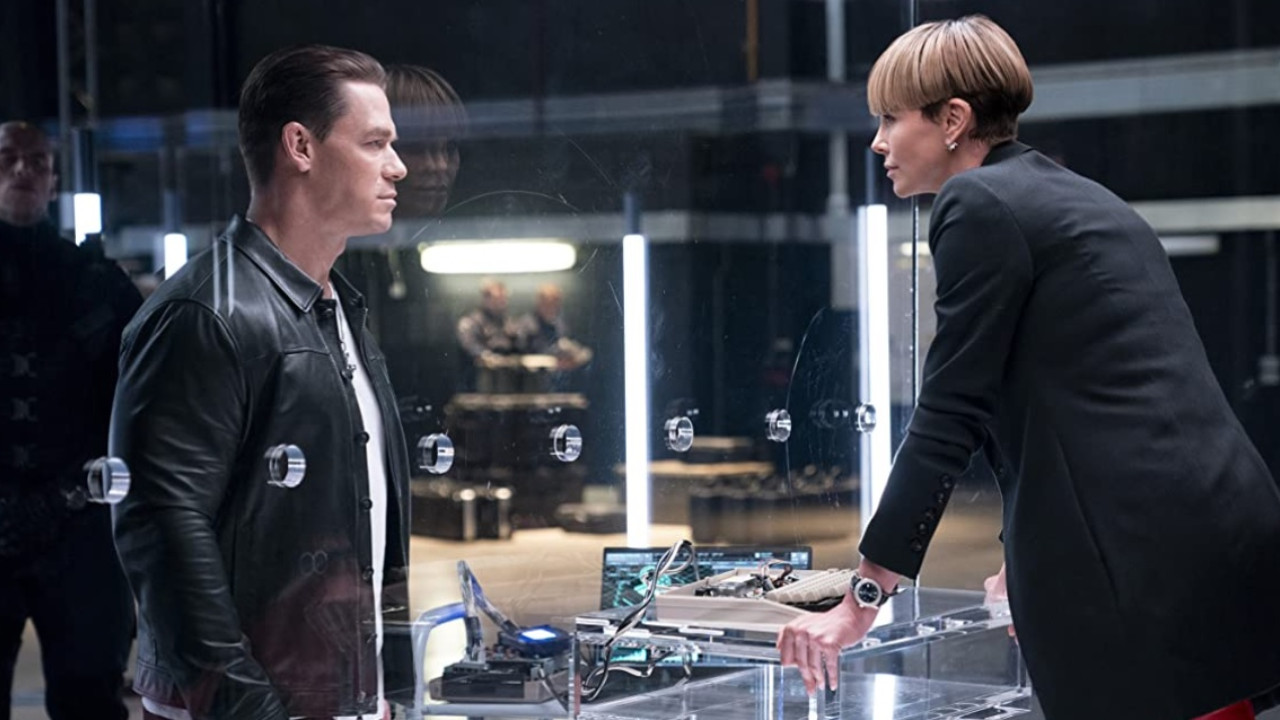
For certain. You also have this precise intriguing stake-credit scene, with Han and Deckard Shaw together once again. Did you feel there was a grudge to steady down there? Because Deckard's basically disunite of the kinsfolk, having killed but not killed Han dynasty.
When I found out he was part of the family, I was equally baffled. I will be given into fans and they'atomic number 75 like 'Justice for [Gal Gadot's type] Giselle' and I'm like, 'Well, no.' Justice for Han is not bringing plunk for a case you like, it was that the treatment of the character was not reactionary. Justice for Han is not something you help American Samoa just aside bringing him back for one moving picture, it's how we treat Han dynasty and wholly our characters from this point on stunned. And so, it just felt really living thing that, with the real estate that we had, at some point, I do wishing to see him face to look with Shaw.
It was a great name with Jason. He's like, 'Hey Man, you called ME the last prison term to do the tag. I did it and you left. This time, you're non gonna go forth? Right?' It was a great moment of connection for me.
Hopefully, we'll see more in Fast 10. I saw that Vin Diesel engine referred to the closing installment, which is coming in two parts, as his Everest. How does it feel informed you're going away to be saying goodbye to these characters?
IT's a weird thing because Fast 10 and 11 are the last 2 movies, they are what I would consider the final chapter. And that that conversation started almost 10 years agone. I remember Paul [Walker] would come in and we would speak for with Vin and I thought IT was just an exercise in what would happen if we were talking about the final chapter. I never thought we would realize it. But it wasn't until I came back off that Vin said 'Let's really coif it.'
I find like the final chapter has had its own journey through the last 10 eld. And IT's in those conversations that it was opening to form. And so nine is trying to point everything, hopefully, in the straight direction. Simply I feel like, tonally, what we'ray trying to carry out, that's exemplary of the last chapter, and that's actually on its ain highway, in a weird sense and, once more, I think the forc of, 'Thigh-slapper, when we started, we never thought we'd comprise on this infatuated journey,' and that the fans and this profession has grown so big. The pressure is, 'Can we ungenerous the saga betwixt all these characters in the right whole step and in decent?'
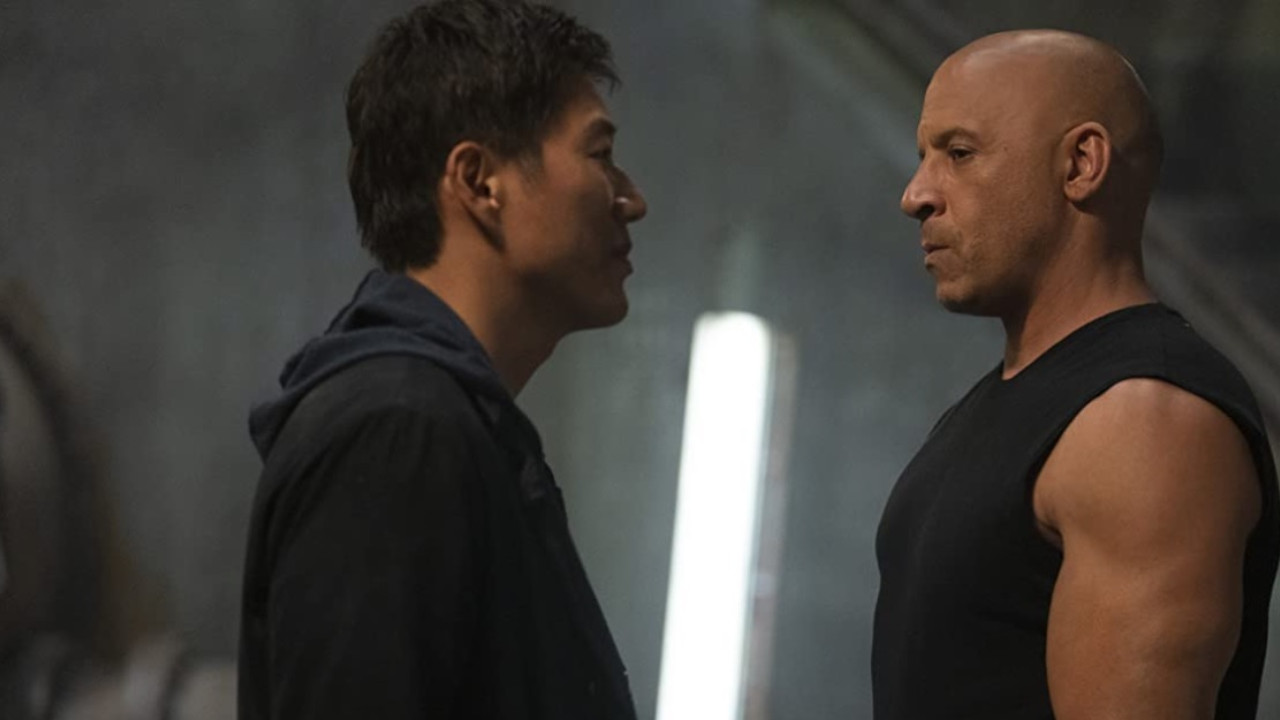
Speaking of St. Paul, in this pic, you have this lovely bon voyage at the end, where Brian returns for a classic family meal. What was the balance of creating something as poignant as that, without the scene feel redundant? Because it does feel like a nice ending.
Obviously, Paul's a very close and extraordinary champion to ME and to all the fans. The conclusion to have Brian survive in the universe, that was a sizeable one. On a personal floor, Paul has this amazing ability that, maybe I don't see him for a year, but when I see him, it feels comparable I didn't omit a instant. And educated Brian O'Connor is still in the existence, I wanted to do Justice Department in capturing the essence of that. And patently, on this one, Mia is Jakob's sibling, too, and it matte alike there was an organic means. Merely it is ace of those things where I am constantly checking myself talking, having the right conversations, I hope, disagreeable to know with respect. If I could fall or so capturing the essence of Paul through Brian, that, to me, is the dream.
It does feel very affecting way to finish the picture. I want to quickly touch happening Tokyo Drift. The climate has changed quite a great deal since that movie was made back in 2005. I find like, if that take was successful today, it would undergo Han as the central character. Do you recollect that's the case? Or would the movie still come out the Saami way?
IT was interesting because I actually had a real conversation [at the time] with the studio. Things were done very differently back then, it was almost like the lead character has to be Caucasian, they have to be white. But I have to tell, I went in saying, 'Well, why? Let's have a real process.' Indeed we did go done a casting process. And I could tell you that, out of every our options, Lucas Black is still to me, when you talk about fish out of water – there were even conversations of 'Oh, well, his accent mark, hindquarters we change it?' I was like, 'No more, that's why!' I actually wanted to hug that.
And so having gone through IT, I always said that, especially with this franchise, it's about creating opportunity. So everybody can come in, and whoever is the best can get that role. And I felt like we did do that. And I remember, even [Han actor] Sung [Kang] came in and learn, but I'm like, 'No, nobelium, no, He's Han.' IT was a real organic process. Ultimately, that's all we can invite. If all things touch, I felt up like we had a light-haired try out process. And I think Lucas was the best for the office. So I ne'er had a doubt. Even plunk for in 05, when the climate was so diametric, I could tell you that I did fight for information technology. And IT wasn't [a decision made] really quickly. And so I was mitigated.
Because that film is so approximately me, I can't really see it any separate way. Simply, I think even for the other roles, we were flying in people from all over the domain, and that that continued to be the process and that's how we found Gallon Gadot, and that litigate is something I take selfsame much to spunk. It's all started along Tokyo Drift.
Fast and Furious 9 is in cinemas now. For more from Rudolf Diesel, be sure to check out our feature on the qualification of Fast and Furious 9, including interviews with Vin Diesel, John Cena, and Lin.

I'm the Entertainment Editor in chief o'er here at GamesRadar+, bringing you all the latest motion picture and TV news, reviews, and features, plus I look after the Total Shoot and SFX sections and socials. I utilised to work on The Independent as a general culture author before specializing in TV and photographic film

Source: https://www.gamesradar.com/fast-and-furious-9-endning-justin-lin-interview/
Posted by: duppstadtvoiceselen.blogspot.com
0 Response to "Fast and Furious 9 ending explained with director Justin Lin - duppstadtvoiceselen"
Post a Comment