

How To Delete App Backup Files In Windows 10
Windows 10 is a phenomenal operating arrangement (OS), but like any other Os, the more than y'all install applications, alter settings and browse the web, y'all can clutter it up. In this article, you're going to learn how to continue Windows clean past covering how to delete backup files in Windows 10, use the disk cleanup cmd's, remove file history, unnecessary system restore points, delete the Windows.erstwhile folder, and the $Windows.~BT folder and more.
Past following the steps in this tutorial, you could potentially make clean upward tens or even hundreds of gigabytes of valuable space on your Windows 10 machine!
Before You Start
If you'd like to follow forth with each of these handy storage-saving tips, you'll only need to meet 1 prerequisite; Windows 10. All examples demonstrated in this tutorial were washed on Windows 10 Build 1909, but these tips should work on older builds also.
Removing Windows 10 Backups
Let'southward start this space-saving tutorial and cover how to delete backup files in Windows x. Windows x has a built-in characteristic that automatically backs up files to a separate storage volume.
The Backup and Restore feature helps ensure you don't lose important files, but it has a downside; the backed-up files' size keeps inflating.
To conserve infinite, you should periodically check for and delete backup files. To do and so, follow the instructions below to remove the backups you don't demand.
- First, click on the Start button, then type fill-in. You should come across the Backup settings application; click on that.
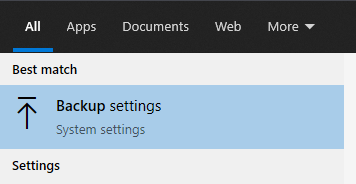
ii. Once in the Fill-in settings, click on the Go to Fill-in and Restore (Windows 7) link to open up the Backup and Restore (Windows 7) app.

3. In the Backup and Restore window, you'll encounter your backup drive. Every bit shown below, click on the Manage space choice.
If yous see "Windows Backup has not been set" under the Backup section, yous can skip the remainder of this department. Yous have no older Windows backups taking up space.
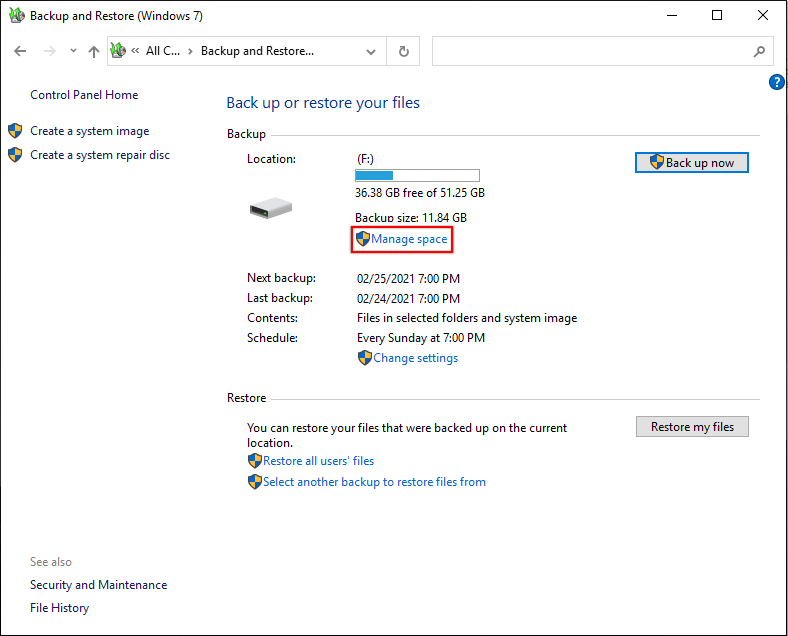
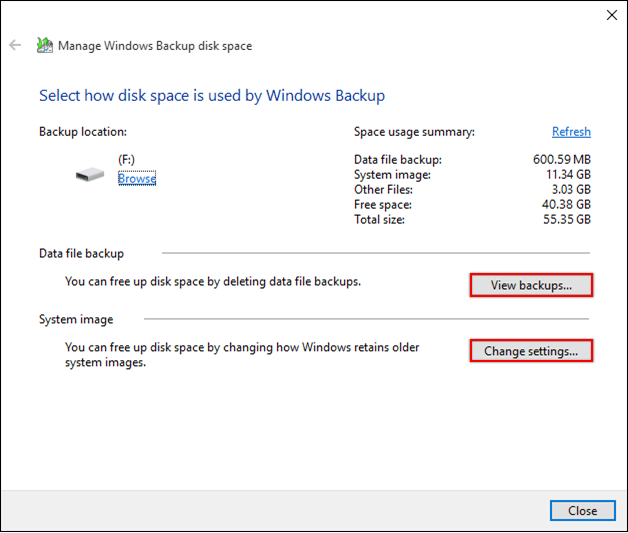
4. In the Manage Windows Fill-in deejay space window, y'all'll see two options to manage your fill-in drive; the View backup and Alter settings options.
Click on the View backups… button. This button lets you choose and select a backup menstruation to delete.
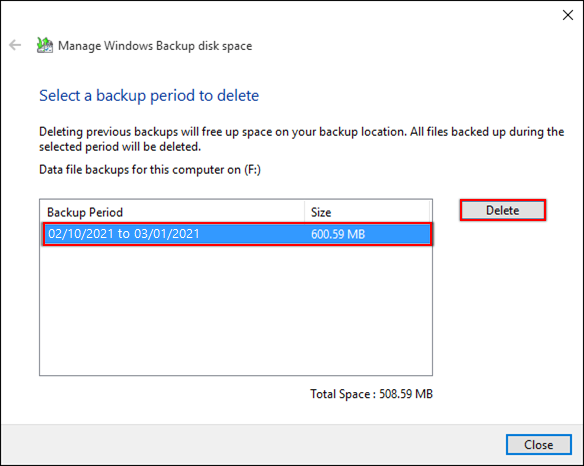
v. Choose a Backup Period from the listing from a timeframe you feel comfortable with removing.
6. Click Delete to remove all contents of the backup files in the selected fourth dimension period.
The Backup and Restore feature saves a copy of the files inside the binder yous selected upon setting up this characteristic. Meaning, deleting a Backup Period will delete all the files the system backed upwardly on that time menstruum.
vii. Back on the master Manage Windows Backup deejay infinite window, click on the Change settings button.
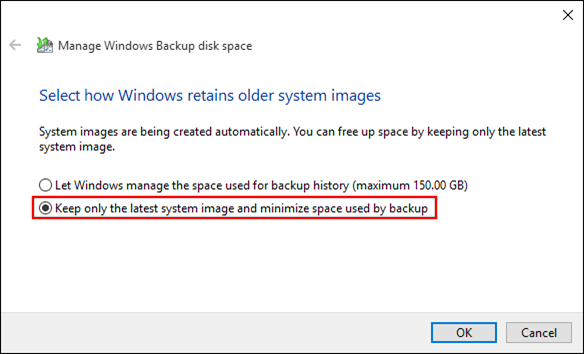
8. Click on the Proceed only the latest system image and minimize infinite used by backup option. Setting this option automatically removes all of the currently-stored backups and only keeps the latest ones.
9. Click OK to continue with the option selected.
Deleting Windows File History
Assuming you've already cleared your backups from the previous instance, just you're still missing a large corporeality of infinite in your drive. Clearing up space from using the File History is some other way to reclaim some space.
Windows File History is some other built-in feature of Windows 10 that lets you automatically back up your files. Unlike the Fill-in settings, File History simply stores files that are in your Documents, Music, Pictures, Videos, and Desktop folders to your split or external bulldoze.
To clean up Windows File History:
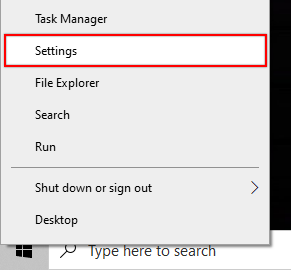
- Right-click on the Windows Start button and choose Settings to open up the Windows Setting window.
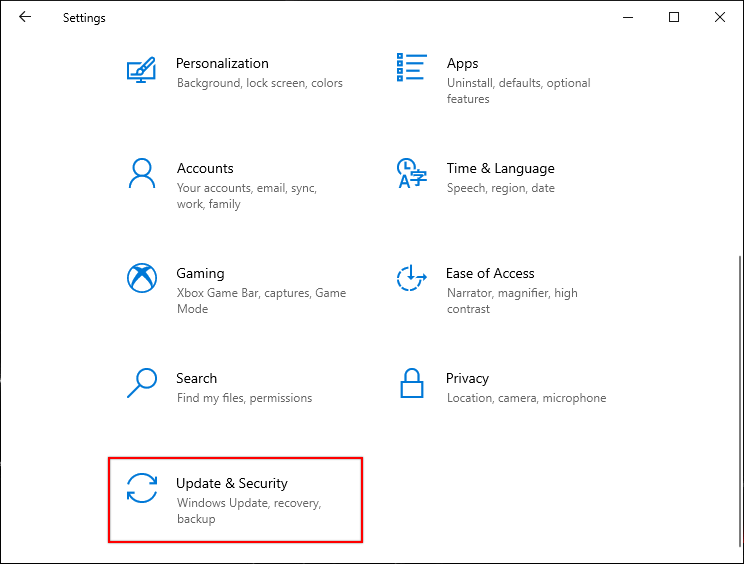
ii. On the Windows Settings folio. whorl downwardly and click on Update & Security.
iii. Click on Fill-in.
4. If you're using Windows File History already, press the More options link to open the Backup Options window.
If you see Back up using File History turned off, you can skip the rest of this section. Y'all have no backed-up files taking up infinite.
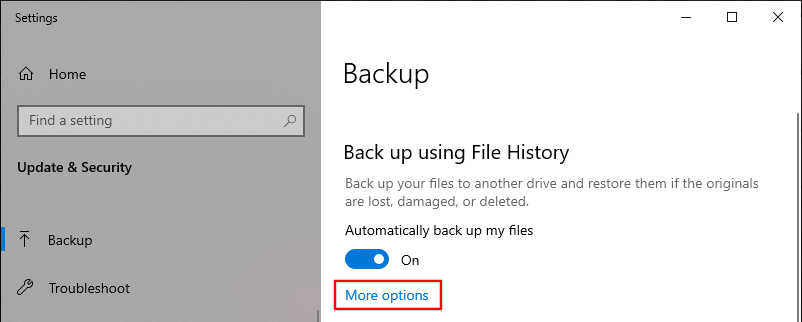
5. In the Backup options window, you'll probably find the Go on my backups dropdown is set up to continue files Forever. To gratuitous upward space on your drive, change the Go on my backups option to 1 month or whatever time interval you prefer, as shown below.
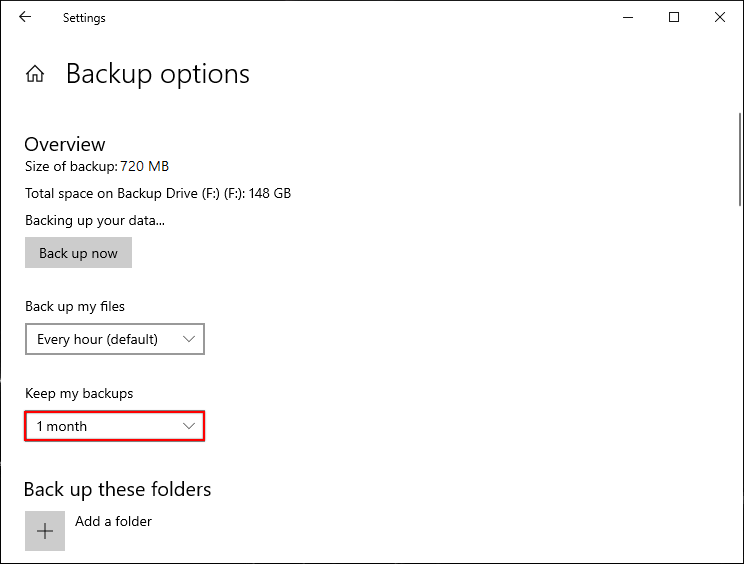
You can also remove the current backup drive equally it completely disables the File History. But, yous should think twice earlier doing then since you wanted to support your files in an external drive in the first identify!
vi. While you're in the Backup Options window, ringlet downwards to the bottom. You lot'll come across an selection as shown below, then click on the Cease using drive button.
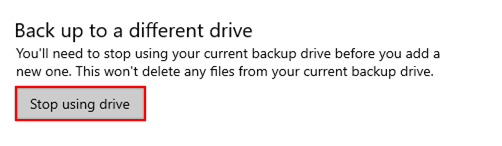
There's too an option to delete all file backups while keeping the recent ones. Run PowerShell as an administrator, then type in this command
fhmanagew.exe -cleanup 0and printing Enter.
Windows Fill-in and File History both focus on a separate or external drive. Now it'due south time to clear up space in your local drive.
Removing Windows System Restore Points
If you've ever experienced abuse with your Windows x Os and discovered y'all could restore it with organization Restore Points, you know the benefit. A system restore point is a collection of files and registry settings taken at a specific point in time.
Even though having a system restore point is a keen benefit, storing many restore points volition eventually take up deejay space. To ensure restore points don't go overboard, follow the steps below on how to remove them.
- Click the Start button and type restore, so click on Create a restore indicate.
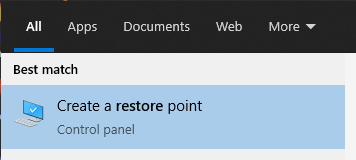
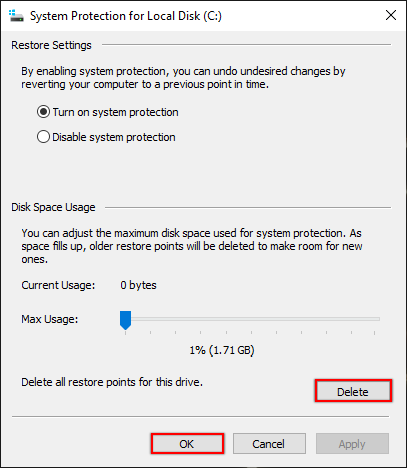
2. Every bit demonstrated below, click on the Configure button under the System Protection tab. This will open upwards the Organization Protection window that lets you configure the arrangement'due south restore points settings.
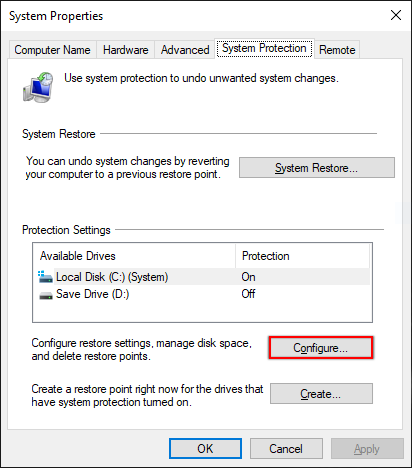
3. Click on the Delete button to delete all restore points freeing up the well-nigh space and click OK.
You lot can ready the maximum space restore points consumes by adjusting the slider if yous demand to maintain some restore points.
Removing Cached Updates
Windows Updates tend to practise what they please in the Windows ten background. When Microsoft releases new updates, Windows x will tend to download and install them automatically.
When Windows x downloads and installs updates, it caches update files that allow you uninstall them at some bespeak if needed. The only caveat is that the files keep piling up, eating abroad storage space.
Other than cleaning upward your storage, removing cached updates fixes issues with Windows Update. Perhaps you lot're getting an error, or it's stuck at 0% download progress. You should start with a clean slate.
Stopping the Windows Update Service
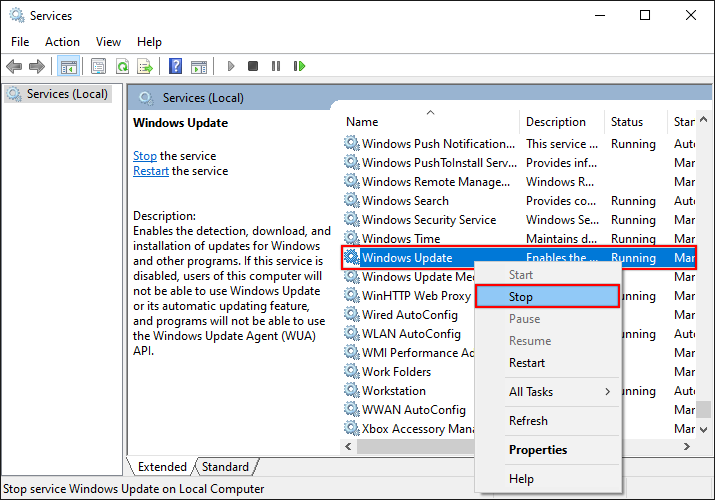
The Windows Update service typically locks cached updates. To remove buried updates, you'll first demand to terminate the Windows Update service. To practise so:
- Click on the Windows start menu and type services.msc. Yous should then run across the Services window pop upward.
ii. Within the Services window, right-click on Windows Updates and select End. Proceed the Services window open to re-enable the Windows Update service later.
Yous can also stop the Windows Update service via PowerShell by running
Become-Service -Name 'wuauserv' | Stop-Service.
Deleting Cached Updates via the GUI
Once you've stopped the Windows Update service, it's time to begin removing some files and folders.
- Open File Explorer and navigate to the C:\Windows\SoftwareDistribution\Download binder.
2. Select all the files and folders by pressing Ctrl+A.
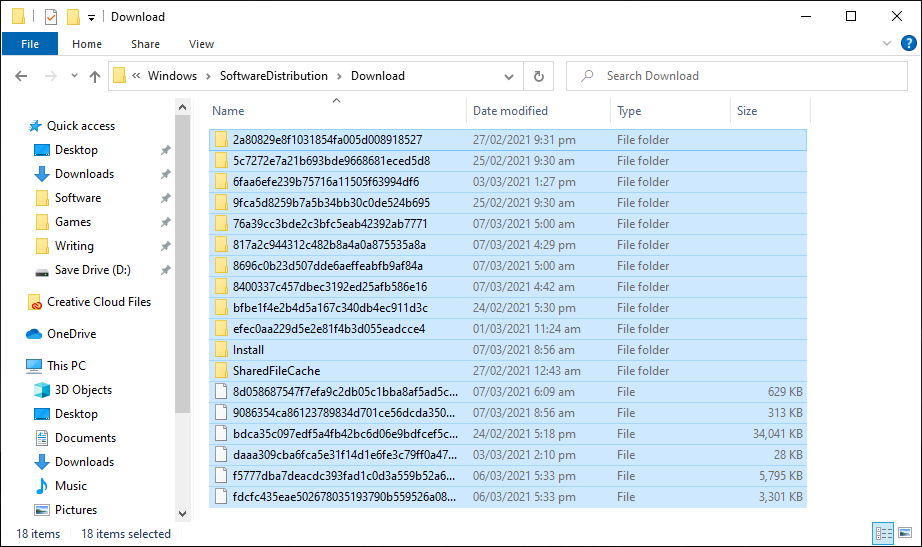
3. Once everything is selected, press the Delete fundamental to remove the buried updates.
To delete the files without moving to Recycle Bin, printing the Shift+Delete keys instead.
4. After removing the cached updates, go back to the Services window, right-click on the Windows Update service and choose Start.
Deleting Files Using PowerShell
In the previous case, manually removing the cached updates from the File Explorer is surely efficient. However, it takes a lot of effort to complete the process.
You tin employ PowerShell to remove the cached updates with a single script and it all happens at once.
Create a PowerShell script and paste the following lawmaking in or open up Windows PowerShell equally Administrator and paste the lawmaking snippet below into the panel.
## Stops the Windows Update Service Stop-Service -Proper noun 'wuauserv' ## Targets the Windows Cached Update location Set-Location $env:windir\SoftwareDistribution\Download ## Deletes everything inside the *Download* folder *-Strength - forces deletion of read-but files ## -Recurse - includes files in sub-directories ## -Confirm:$fake - (quiet fashion) suppresses prompts* ## Remove-Item * -Recurse -Strength -Confirm:$false ## Starts the Windows Update Service Starting time-Service -Proper noun 'wuauserv' Deleting the Windows.Erstwhile Binder After a Windows 10 Upgrade
If you were previously running Windows 7 on your calculator and upgraded to Windows 10, you may accept a folder named Windows.one-time on your estimator. This folder is a backup of your Windows 7 installation when you upgrade to Windows 10.
In a sense, it's great that y'all can however access stuff you had in your old Windows version. Still, an erstwhile Windows version takes up a big amount of infinite in your drive, so how do you fix that?
You lot tin can clean upward this Windows.old binder in three different ways, each with its advantages and disadvantages.
Using the Storage Sense Settings
You can remove old Windows versions by using a Windows 10 feature called Storage Sense. Storage Sense is a congenital-in Windows x feature that monitors storage and frees up space automatically. Below are some of Storage Sense features that make it stand up-out from other methods of cleaning up your Windows x system.
- Clears Temporary Files in your system that are non in use
- Dehydrates deject-backed content that hasn't been opened in a certain amount of days
- Deletes files in the Downloads folder if they haven't been opened for more than a sure number of days.
- Removes files in the Recycle Bin if they accept been there longer than the time configured in the Storage Sense settings.
Storage Sense is pretty useful for many things, like the sole purpose of deleting the old versions of your Windows system, here's how.
To delete a Windows.old folder with Storage Sense:
- Click on the Start push and type in storage, and so click on Storage Settings.
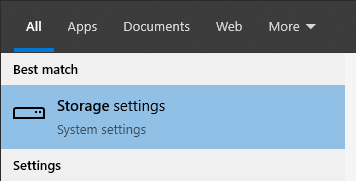
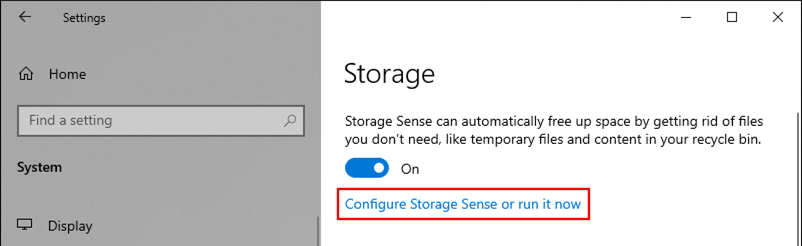
ii. Once you take the Storage settings upward, click on the Configure Storage Sense or run it now choice.
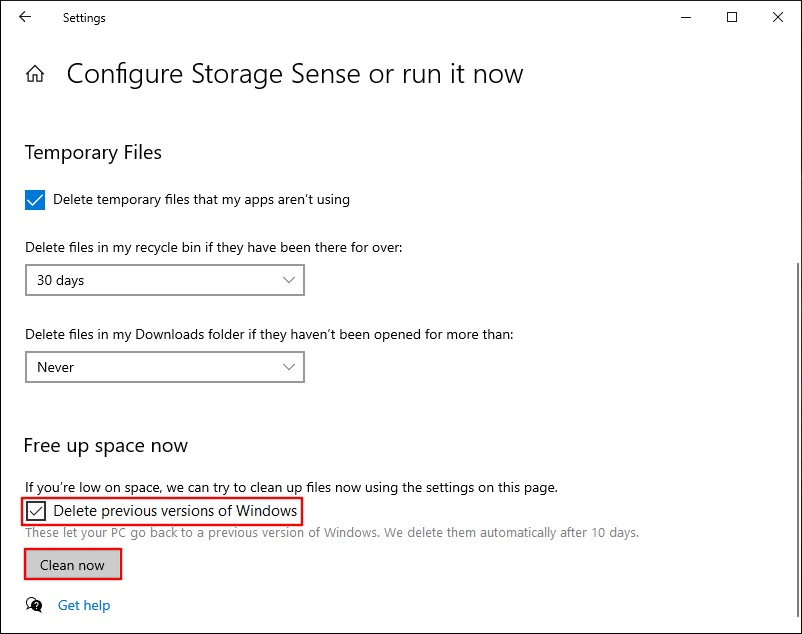
3. In the Configure Storage Sense window, scroll down and enable the Delete previous Windows option.
If you don't see the Delete previous Windows pick, you can skip this section.
4. Click on the Make clean now button.
Using the Temporary Files Settings
Windows 10 too has a handy feature hidden nether the Storage section in the Settings menu chosen Temporary Files. This characteristic tin clean up many types of unwanted files but for now, let'due south focus on deleting the Windows.old folder.
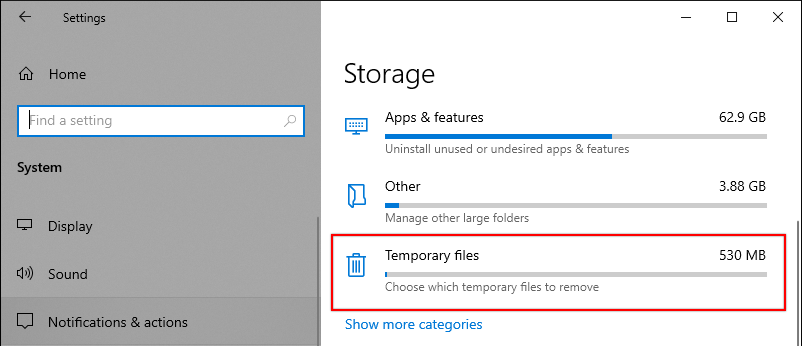
- Navigate back to the Storage settings window. Click on Temporary files.
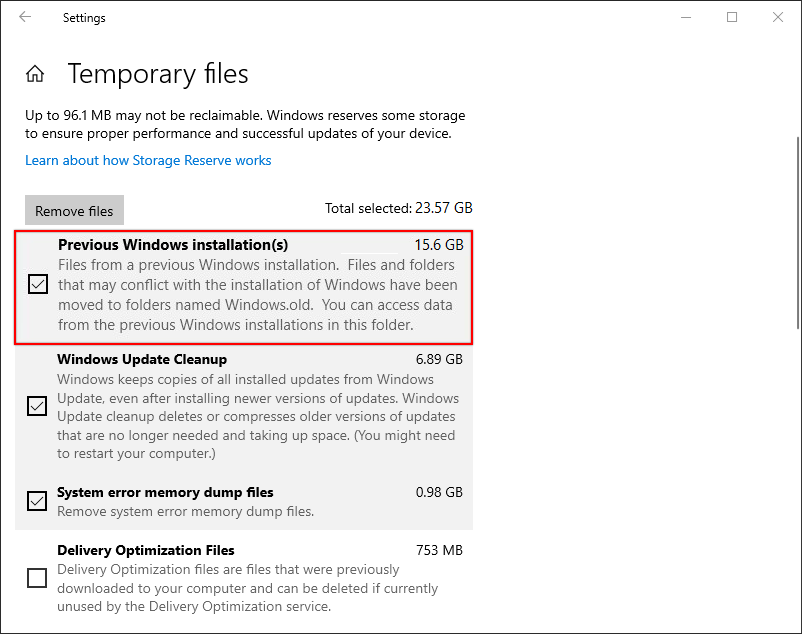
2. In the Temporary files window, cheque the Previous Windows installation(s) option. This selection includes the entire one-time Windows version.
In case you don't encounter the Previous Windows installation(due south) option, information technology ways you don't have old Windows versions in the organisation, and you tin can skip this section.
3. Click on the Remove files button to clean upward every blazon of temporary file checked.
As shown below, the total space to be cleared is 23.57 GB—huge, correct?
Running the Disk Cleanup Tool
For the final fashion to remove a Windows.old folder and one-time installation, nosotros take the Disk Cleanup tool. Disk Cleanup is part of the Windows legacy tool. It was offset introduced in Windows 98. Y'all can say that the Disk Cleanup tool is an onetime version of the Storage Sense in Windows 10.
Yes, information technology's onetime only not obsolete as it still does its task pretty well, such as cleaning upwards the previous version of Windows you take on your storage.
To run the Disk Cleanup tool to cleanup the Windows.old binder:
- Click on the Windows start button, type cleanmgr and select Deejay Cleanup.
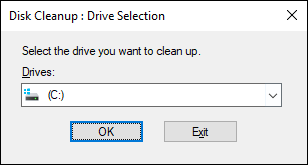
2. On the pocket-sized pop-up window that comes upwardly, choose the drive yous want to clean upwardly and click OK. Since y'all're using the Disk Cleanup tool to remove the windows.old folder, choose C:\.
iii. Inside the Disk Cleanup window, click on the Clean up system files button to include the system files on the list of files and folders you can delete.
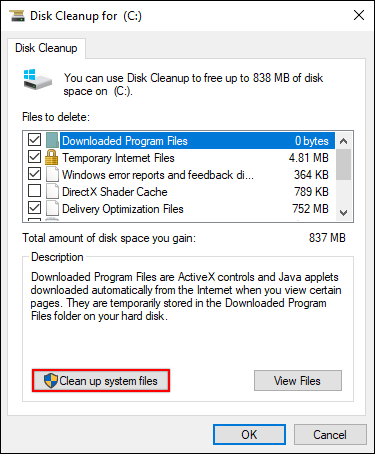
You can likewise choose to delete temporary files in the Disk Cleanup selection area, which you'll run into covered subsequently.
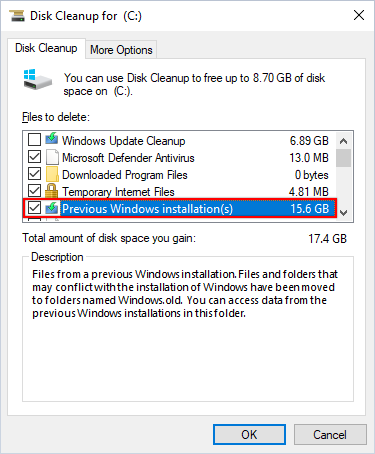
iv. When you lot click on the Make clean up system files button, select the C:\ again. You'll so see a list containing the organization files, such as the old windows versions displayed with Previous Windows installation(southward).
five. Check the Previous Windows installation(due south) option to add to the list of files to delete from the organisation and click OK.
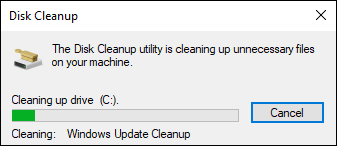
It volition take some time to complete cleaning upward the drive depending on the full corporeality of deejay space to be cleaned. Once the cleaning is done, then yous're all gear up!
Deleting the $Windows.~BT and $Windows.~WS Folders?
Like the Windows.onetime folder from the previous section, when you upgrade Windows to Windows 10, information technology creates a $Windows.~BT and a $Windows.~WS folder. These folders contain a copy of your Windows system that enables you to revert to your erstwhile version of Windows.
Since the release of the Windows ten Anniversary Update (Version 1607), you tin can curl back to your previous Windows version inside x days after upgrading. And so, both the $Windows.~BT and $Windows.~WS folders are deleted automatically once the rollback period is over.
Is it safe to delete them on your own? Yep, but it's a bit tricky getting rid of these folders.
The ~WS folders are system folders, meaning the system owns them, non the user. To delete the folders, you lot'll starting time need to take ownership, see how to in the side by side section.
Deleting System Folders Using PowerShell
There are many means to delete the $Windows.~BT and $Windows.~WS folders that y'all'll find on the net. Some say they piece of work, some say they don't do anything, but the nearly effective manner of deleting these system files is using PowerShell as administrator.
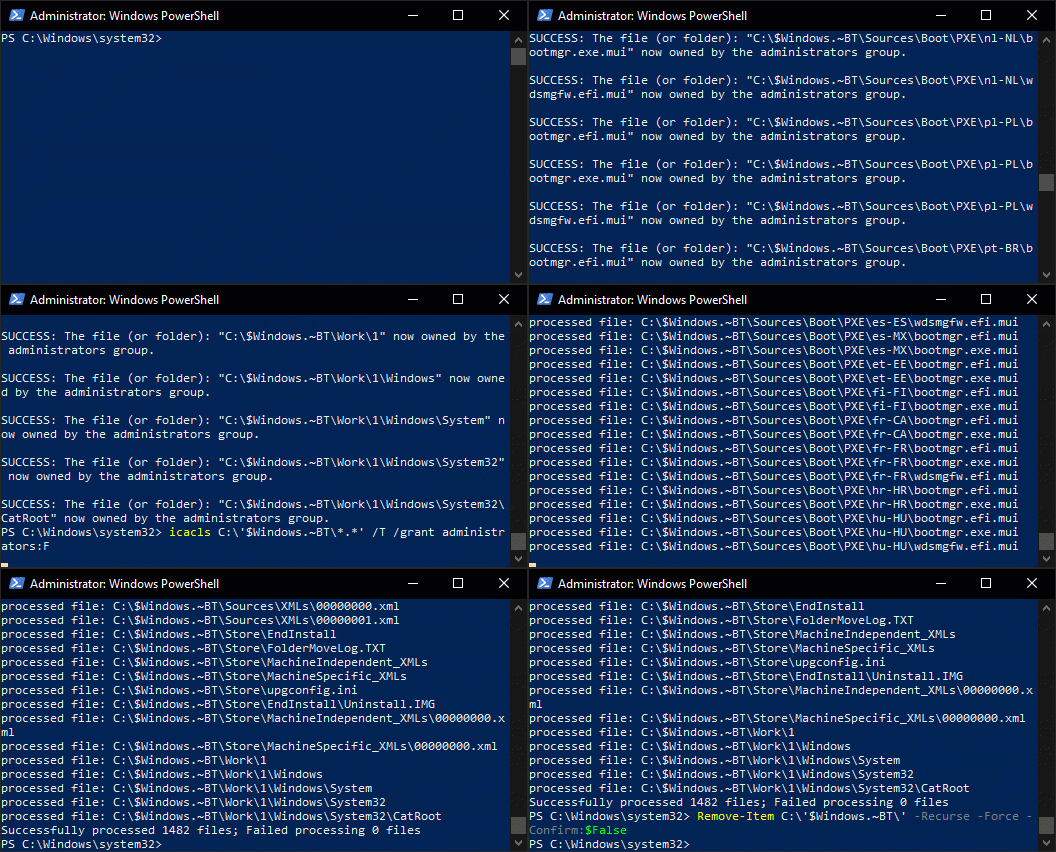
To delete the $Windows.~BT Folder and other arrangement folders, open up Windows PowerShell as administrator, and re-create the following code into the console. You tin can also create a PowerShell script with this code.
## takes ownership of the folder ## */F - specifies the filename or directory name design ## /R - recurse: instructs the tool to operate on files in the specified directory and all subdirectories. ## /A - gives ownership to the administrators' grouping instead of the current user.* takeown /F C:\'$Windows.~BT\*' /R /A ## Grants full control for the Ambassador account to brand changes on the folder ## */T - indicates that this operation is performed on all matching files/directories beneath the directories specified in the name. ## /grant - grants the specified user access rights.* icacls C:\'$Windows.~BT\*.*' /T /grant administrators:F ## Deletes the system folder ## *-Force - forces deletion of read-only files ## -Recurse - includes files in sub-directories ## -Confirm:$false - (quiet way) suppresses prompts* Remove-Item C:\'$Windows.~BT\' -Recurse -Force -Confirm:$Simulated You tin encounter the sit-in below of deleting the $Windows.~BT folder, but the same method applies for deleting the $Windows.~WS folder.
Other Space-Saving Tips to Make clean up Windows 10
Aside from the main examples in this tutorial, there are other means y'all tin clear upward infinite in your storage, such as deleting files from the Downloads binder and uninstalling unused applications.
Immigration Your Downloads Binder
A typical culprit causing you to lose infinite in your bulldoze is your Downloads folder. Usually set as the default download location in your web browser, this folder tin can expand quickly.
To make clean information technology upwardly:
- Open up File Explorer, paste C:\Users\%USERPROFILE%\Downloads in the accost bar, and press Enter. This path points to the Downloads folder in your home directory.
2. Select everything inside of this folder by pressing Ctrl+A to select all files or concur the Ctrl cardinal while clicking on each file to delete and leave the ones you want to keep.
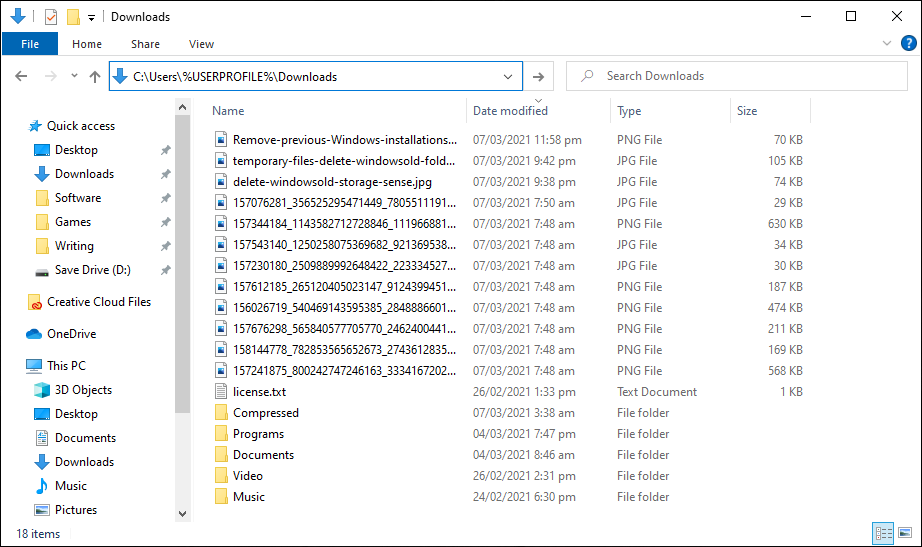
3. Once you're happy with your selection, printing the Delete or Shift+Delete keys to delete the files permanently.
Removing Unused Applications
Frequently than non, you tend to install applications and exit them there in the system fifty-fifty if you're non using them. Equally a result, these applications take up space in your bulldoze, then it would exist wise to uninstall some of them.
To uninstall applications:
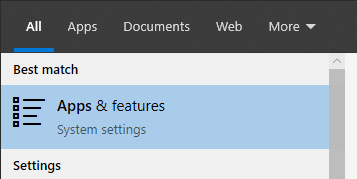
- Click on the Start button, type in apps and click on Apps & Features.
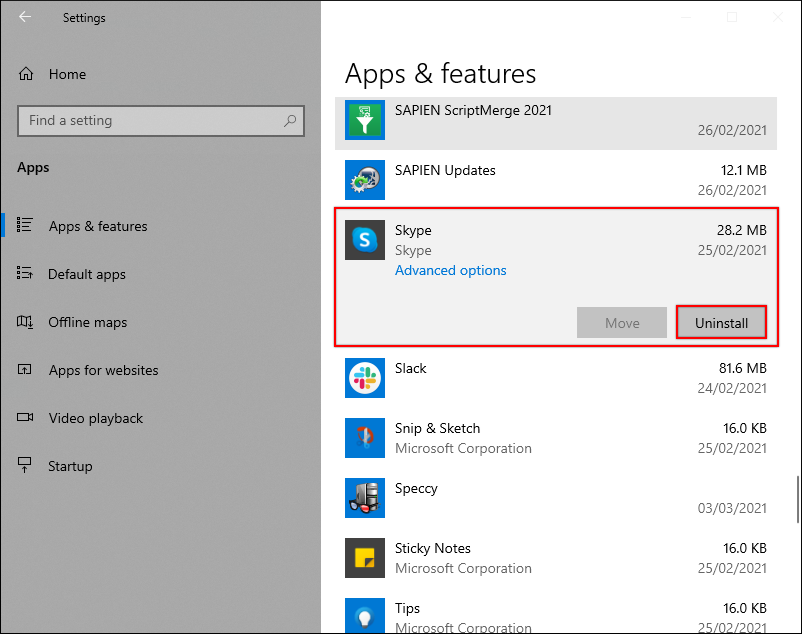
2. From the Apps & features section, look for any application you don't need anymore, select an application and click on Uninstall to remove information technology from the organisation.
Deleting Temp Files in Windows ten
If you've been post-obit along, you may have already run the Disk Cleanup tool. This tool, by default, Temporary Files are cleaned upward when using Disk Cleanup. But if yous're skeptical and desire to be on the safe side, you tin also clean up temporary files via File Explorer or PowerShell.
Temp files are located in the C:\Users\%USERPROFILE%\AppData\Local\Temp binder. You tin safely delete all files in this binder using either File Explorer or perhaps PowerShell if you lot adopt the command line or are automating this step.
If you'd like to delete temp files in Windows x with PowerShell:
- Click on the Windows kickoff menu and blazon powershell.
2. Right-click on Windows PowerShell and cull Run as Ambassador.
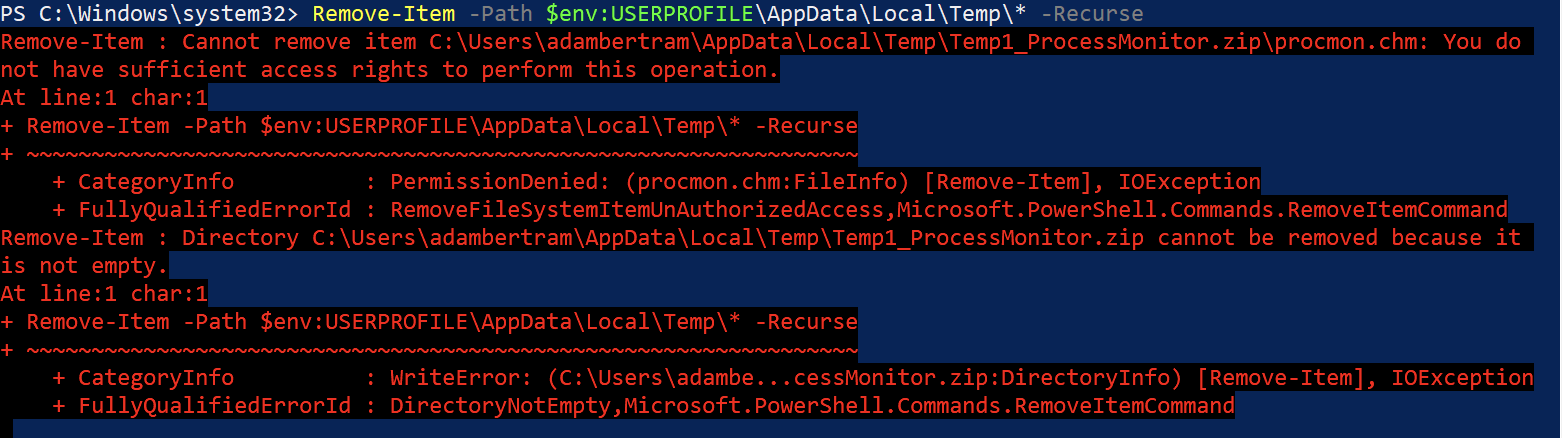
three. Paste the following control inside of the PowerShell console. This command will attempt to remove all files and folders inside of your temp file folder.
Remove-Item -Path $env:USERPROFILE\AppData\Local\Temp\* -Recurse PowerShell may render a few errors, as shown below. This is to be expected. You'll usually discover other programs are actively using some files. If this happens, restart Windows x and try again, but you may not exist able to remove all files.
Conclusion
You should now have the knowledge you need to proceed Windows 10 costless of clutter! Once you lot've deleted backup files, file history, the Windows.old folder, run disk cleanup cmd's, and deleted temp files in Windows 10, your Bone should be streamlined and ready to become!

How To Delete App Backup Files In Windows 10,
Source: https://adamtheautomator.com/how-to-delete-backup-files-in-windows-10/
Posted by: duppstadtvoiceselen.blogspot.com
0 Response to "How To Delete App Backup Files In Windows 10"
Post a Comment